
|
NEWS RELEASE |
Date: 10/16/2026 |
Safe Haven is NOT Guaranteed: What Every Boater and Marina Should Know
Picture this: you are cruising along on a calm afternoon when dark clouds build rapidly on the horizon. Moments later, your NOAA weather radio buzzes with an urgent alarm—a line of strong thunderstorms is heading your way, and official guidance urges all mariners to seek safe harbor immediately. Your first instinct is to head for the nearest dock. But here is a reality check that catches many boaters off guard: just because a marina has empty slips does not mean you are automatically guaranteed a spot to tie up.
The Coast Guard's Definition vs. Reality
The U.S. Coast Guard Maritime Assistance Policy defines a Safe Haven as: "A place that can accommodate and WILL ACCEPT the safe mooring of a vessel, has a means of communication, and has access to medical assistance."
Notice those key words: WILL ACCEPT. At the end of the day, marinas are private businesses. Under normal conditions, they have every legal right to decide who is allowed access to their docks and facilities.
Federal Rules vs. Real-World Necessity
Many captains assume there must be a federal regulation forcing marinas to shelter boaters during a squall. In reality, there is no specific rule in the Code of Federal Regulations (CFR) that explicitly mandates private marinas to provide safe harbor or temporary mooring to recreational vessels during a storm.
- Instead, emergency situations rely on long-standing common law principles:
- The Doctrine of Private Necessity: Common law recognizes that when human life or property is in imminent danger, a captain has a legal privilege to seek shelter on private property—including tying up to a private dock. A marina or dockmaster generally cannot forcibly eject someone into severe, life-threatening weather conditions without risking serious legal liability.
- You Remain Responsible for Damage: Seeking shelter under private necessity gets you to safety, but it is not a blank check. As the vessel owner, you are financially responsible for any physical damage your boat causes to the dock or facility.
- Preparation Over Debate: An active weather emergency on the water is the absolute worst time to debate property rights. Being prepared ahead of time is what keeps you and your crew safe.
- What Boaters Can Do to Stay Safe
- Plan Your Route Ahead of Time: Before leaving the boat ramp, map out potential safe haven facilities and public waterfront access along your course.
- Put On Life Jackets Immediately: The moment weather threatens, get everyone onboard into life jackets.
- Know Your Anchoring Risks: Dropping anchor into the wind and closing all hatches is an option, but it can be hazardous in cloud-to-ground lightning or heavy seas where capsizing is a risk.
- Head for Sheltered Water Early: Tuck into an inlet or protected bay to get out of high winds, rough seas, and strong currents. Act quickly—small-craft inlet entrances can quickly become impassable once heavy breaking swells build across the channel.
- Look for Public Facilities First: Prioritize public waterfront docks where access is open to the community.
- Call Ahead on the Radio or Phone: If you must duck into a private marina, try hailing them on your VHF marine radio or calling by phone to ask polite permission before tying up.
- What Marinas and Dockmasters Can Do
- Make Your Policy Clear and Public: Remove any confusion by publishing your transient dockage and emergency safe haven policy on your website and in navigation references like the Coast Pilot.
- Train Your Dock Staff: Remember that a boater pulling up during a sudden storm is under intense stress. Ensure your staff understands facility protocols and is trained to communicate clearly and calmly.
- Foster Boater Community Spirit: Consider welcoming boaters with clear signage regarding emergency shelter. Helping out a fellow mariner
Marinas are private business entities with real liability concerns, but clear communication can prevent dangerous misunderstandings when a storm hits:
Informational Notice: This article is for general educational and informational purposes only and does not constitute legal advice. Boaters, dock owners, and marina operators should consult a qualified maritime attorney regarding specific legal rights, liabilities, or emergency protocols.
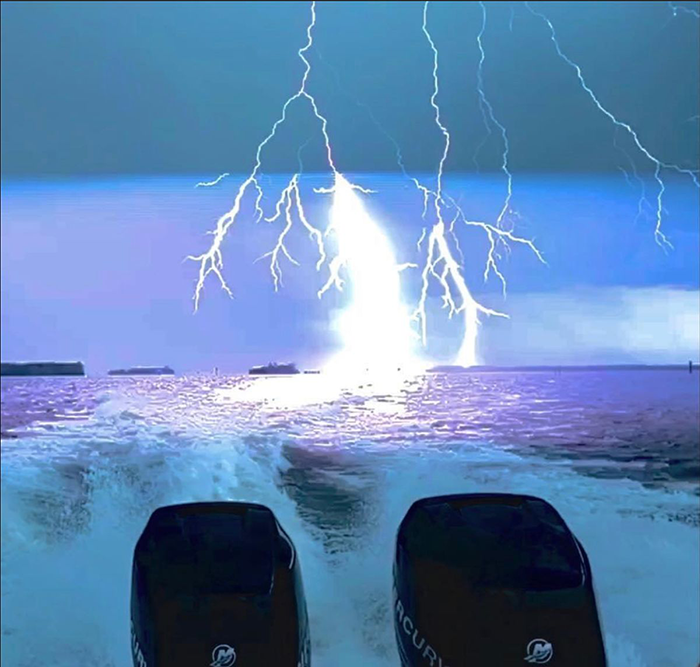
Lightning is frightening! Be prepared, know what to do BEFORE the situation arises.
###
Media Contact:
Daniel Eaton
Flotilla Staff Officer Public Affairs
PublicAffairs@Aux91FMB.org | 239-690-6780 Option 4